
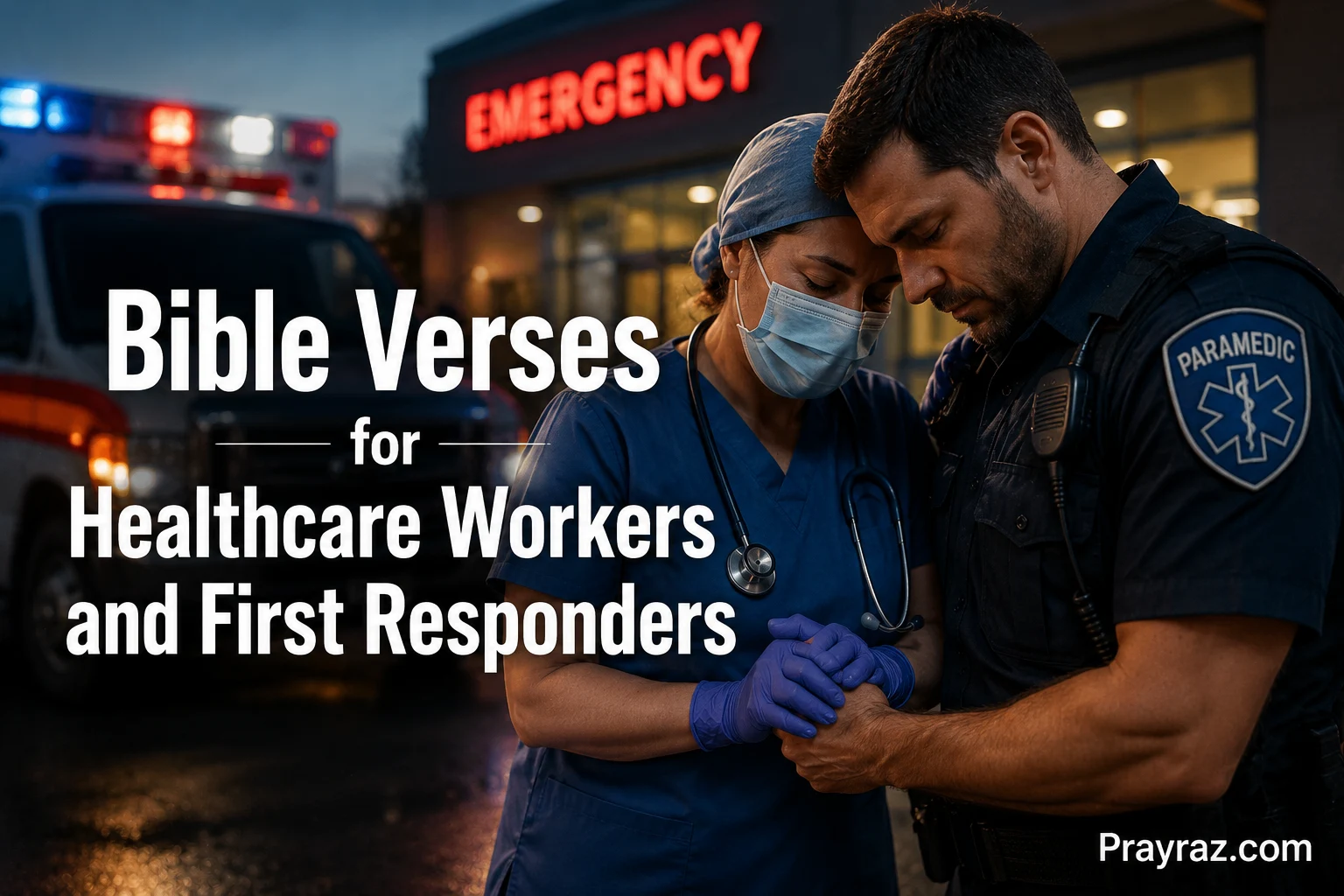
Healthcare professionals and emergency responders carry responsibilities that many people never see up close. They step into hospital rooms, accident scenes, emergency calls, crisis situations, and long shifts where people are frightened, hurting, confused, or close to losing hope. Nurses, doctors, paramedics, firefighters, police officers, dispatchers, chaplains, and caregivers often serve others while quietly carrying stress, grief, pressure, and fatigue of their own.
Faith does not remove every hard moment, but it gives strength inside the hard moment. Scripture reminds those who serve that God sees their work, values compassion, gives wisdom, provides courage, and offers rest to weary souls. These passages are not magic words or quick fixes. They are spiritual anchors. They help servants of mercy remember that they are not alone, even when the shift is long, the call is painful, or the outcome is uncertain.
This guide brings together encouraging Scriptures, short reflections, and simple prayers for those who care for the sick, protect communities, respond to emergencies, comfort grieving families, and serve under pressure. It can be used before a shift, during a break, after a difficult call, in a hospital chapel, in a prayer group, or as a message of support for someone who serves on the front lines.
Quick Answer: Best Scriptures for Medical and Emergency Workers
Some of the most comforting passages for medical workers and emergency personnel focus on strength, courage, protection, wisdom, compassion, and rest. These references are especially helpful:
- Joshua 1:9 for courage during difficult situations
- Psalm 46:1 for strength in trouble
- Isaiah 41:10 for God’s presence in fear
- Matthew 11:28 for rest when weary
- Galatians 6:9 for endurance in doing good
- James 1:5 for wisdom in decision-making
- Colossians 3:23 for serving with purpose
- Psalm 91:11 for protection
- Proverbs 3:5–6 for guidance
- 2 Corinthians 1:3–4 for comfort after grief
Short Prayer for a Healthcare Worker or Responder
Lord, strengthen every person who serves the sick, injured, frightened, and vulnerable. Give them wisdom in urgent moments, peace under pressure, compassion when they are tired, and protection as they work. Renew their hearts when the day feels heavy, and remind them that their service matters deeply. Amen.
Why Scripture Matters for Those Who Serve Under Pressure
Medical and emergency work often places people in situations where decisions must be made quickly and compassion must remain steady. A nurse may comfort a patient while managing several urgent tasks. A doctor may carry the weight of complex decisions. A paramedic may arrive before anyone else knows what to do. A firefighter may move toward danger while others move away. A police officer or dispatcher may face tense moments that require calm judgment.
Scripture matters in these moments because it speaks to the inner life. It offers strength when fear begins to rise and uncertainty fills the heart. It brings lasting peace in the middle of life’s noise and distractions. Most importantly, it reminds those who serve faithfully that their value is not defined by results, achievements, recognition, or performance, but by their faithfulness and purpose in God’s eyes. God sees faithfulness, even when no one else notices.
Faith Does Not Deny Hardship
The Bible never teaches that faithful people avoid pain. Instead, it shows that God remains present in suffering. Psalm 34:18 says the Lord is near to the brokenhearted. That truth matters in hospital rooms, accident scenes, waiting areas, and quiet spaces where workers process what happened.
For healthcare staff and emergency personnel, faith can become a steady place to return to. It does not replace training, skill, professional care, counseling, rest, or support systems. Rather, it strengthens the heart and points the soul back to God.
Scripture Helps Reframe Service
Many people in caring professions entered their work because they wanted to help others. Yet even meaningful work can become draining. Scripture helps reconnect service with purpose. Colossians 3:23 reminds believers to work heartily as serving the Lord. This does not mean ignoring limits. It means seeing daily service as sacred, even when tasks feel ordinary.
Changing a dressing, answering a call, preparing medication, driving an ambulance, sitting with a grieving family, or calming a frightened patient can become an act of compassion before God.
Scriptures for Strength During Long Shifts
Long shifts can stretch the body and mind. Fatigue can make even simple tasks feel heavy. In those moments, Scripture reminds servants that strength is not only physical. God gives inner endurance, patience, and steadiness.
Isaiah 40:31
Isaiah 40:31 speaks about renewed strength for those who wait on the Lord. This verse is meaningful for anyone who feels worn down by repeated demands. It reminds tired workers that renewal comes from God, not from pretending to be strong all the time.
A healthcare professional may not always be able to stop and rest immediately. Still, even a brief prayer between tasks can become a moment of spiritual breathing. “Lord, renew my strength for the next patient, the next call, the next decision.”
Philippians 4:13
Philippians 4:13 is often remembered as a verse about strength through Christ. For medical and emergency workers, it can be a reminder that they do not have to rely only on their own emotional reserves.
This verse should not be used to pressure someone to overwork. Instead, it points to Christ as the source of inner help when responsibilities feel bigger than personal ability.
Psalm 28:7
Psalm 28:7 describes the Lord as strength and shield. That image speaks deeply to people who serve in demanding environments. Strength helps them continue. A shield reminds them that God is also their protector.
For someone entering an emergency room, fire scene, ambulance, operating room, or crisis call, this verse can become a quiet prayer: “Lord, be my strength and shield today.”
Scriptures for Courage in Emergencies
Emergencies are often unpredictable. They require quick thinking, calm action, and courage. The Bible repeatedly tells God’s people not to fear, not because danger is imaginary, but because God is near.
Joshua 1:9
Joshua 1:9 calls God’s people to be strong and courageous because the Lord is with them. This verse is especially fitting for first responders who enter unknown situations.
Courage does not mean feeling no fear. It means doing what is needed while trusting that God is present. A responder may still feel nervous, alert, or emotionally affected. Yet faith gives the heart a foundation beneath the fear.
Isaiah 41:10
Isaiah 41:10 offers comfort for moments when fear feels close. It reminds believers that God strengthens, helps, and upholds His people.
This passage can encourage a firefighter before entering danger, a paramedic responding to a severe call, a nurse caring for a critical patient, or a doctor facing a difficult diagnosis conversation.
Psalm 56:3
Psalm 56:3 is simple and honest: when fear comes, trust can rise. This verse is helpful because it does not shame fear. It gives fear somewhere to go.
A worker can pray, “Lord, I am afraid, but I trust You.” That prayer is honest, humble, and strong.
Scriptures for Protection Over Frontline Workers
Protection is one of the most common prayer needs for people serving in healthcare and emergency response. Their work may expose them to physical danger, illness, violence, unsafe environments, emotional trauma, or unpredictable situations.
Psalm 91:11
Psalm 91:11 speaks of God’s angels having charge over His people. Many families pray this passage over loved ones who serve in risky roles.
This verse can be used as a prayer for safe travel, clear judgment, protected hands, steady movement, and guarded hearts.
2 Thessalonians 3:3
2 Thessalonians 3:3 reminds believers that the Lord is faithful and able to guard them. This is a powerful promise for those who feel exposed to danger.
A simple prayer from this verse may be: “Faithful Lord, guard those who serve today. Protect their bodies, minds, families, and spirits.”
Psalm 121:7–8
Psalm 121:7–8 speaks of the Lord keeping His people in their going out and coming in. This is especially meaningful for shift workers leaving home at odd hours, driving to calls, moving through hospitals, or returning after emotionally heavy days.
Families can pray this passage when a loved one leaves for work: “Lord, keep their going out and coming in.”
Scriptures for Wisdom in Difficult Decisions
Healthcare workers and responders often face decisions that affect lives. Even with training and experience, the pressure can feel heavy. Scripture invites believers to seek wisdom from God.
James 1:5
James 1:5 teaches that anyone who lacks wisdom may ask God. This is one of the clearest verses for professionals making difficult choices.
Doctors, nurses, paramedics, dispatchers, chaplains, and leaders can pray this before a shift: “Lord, give me wisdom. Help me notice what matters. Guide my words and actions.”
Proverbs 3:5–6
Proverbs 3:5–6 calls believers to trust the Lord and acknowledge Him in all ways. This does not mean ignoring professional knowledge. Instead, it means bringing skill, training, and humility under God’s guidance.
A Christian medical worker can study, prepare, follow best practice, and still pray, “Lord, direct my path.”
Colossians 1:9
Colossians 1:9 includes a prayer for spiritual wisdom and understanding. It can be adapted for those serving in complex environments.
Prayer for wisdom is not weakness. It is a sign of humility. It recognizes that even trained people need God’s help.
Scriptures for Compassion Toward Patients and Families
Compassion is at the heart of healing work. Patients are not problems to solve; they are people made in God’s image. Families are not interruptions; they are often frightened people needing kindness and clarity.
Colossians 3:12
Colossians 3:12 calls believers to clothe themselves with compassion, kindness, humility, gentleness, and patience. This verse is deeply practical for patient care.
A worker may not be able to control every situation, but they can ask God for a compassionate spirit. Even a gentle tone can bring comfort to someone in distress.
Matthew 25:36
Matthew 25:36 includes the phrase about being sick and visited. This passage reminds Christians that caring for the vulnerable has spiritual meaning.
Healthcare service is not only technical work. It can also be a form of mercy. When someone tends to the sick with dignity and love, they reflect the compassion of Christ.
Luke 10:33–34
The Good Samaritan cared for a wounded man with practical mercy. He noticed, approached, treated wounds, and arranged care. This story speaks strongly to nurses, doctors, EMTs, firefighters, police officers, and caregivers.
Compassion is not only a feeling. It moves toward need.
Scriptures for Peace During Stressful Moments
Stress can build quickly in medical and emergency settings. Alarms, urgent calls, family questions, paperwork, staffing pressure, and unexpected outcomes can weigh heavily on the mind.
John 14:27
John 14:27 speaks of the peace Christ gives. This peace is not dependent on calm circumstances. It is the peace of His presence.
A worker can pray this verse quietly while washing hands, walking into a room, sitting in an ambulance, or stepping away for a short break.
Philippians 4:6–7
Philippians 4:6–7 encourages believers to bring concerns to God in prayer. It also speaks of the peace of God guarding hearts and minds.
This passage is powerful for workers whose minds keep replaying difficult scenes. Prayer can become a way to hand those burdens to God rather than carrying them alone.
Psalm 4:8
Psalm 4:8 speaks of lying down and sleeping in peace because the Lord provides safety. This verse can help those who struggle to rest after a demanding shift.
A short bedtime prayer may be: “Lord, quiet my mind. Help me sleep in Your care.”
Scriptures for Emotional Healing After Hard Calls
Some days leave marks on the heart. A patient outcome may be painful. A scene may be traumatic. A conversation with a family may stay in the mind. Faith gives space for lament, grief, and healing.
Psalm 34:18
Psalm 34:18 says the Lord is near to the brokenhearted. This is one of the most tender verses for anyone carrying grief.
It reminds workers that God is not distant from pain. He is near in the moments people cannot explain, fix, or forget.
2 Corinthians 1:3–4
This passage describes God as the Father of compassion and God of all comfort. It also teaches that those who receive comfort can comfort others.
For caregivers and responders, this verse offers both personal healing and ministry purpose. God comforts the comforters.
Revelation 21:4
Revelation 21:4 points to a future where God wipes away tears and death is no more. This verse does not erase present grief, but it gives hope beyond it.
For those who witness suffering often, eternal hope matters. It reminds them that pain does not have the final word.
Scriptures for Caregivers Feeling Burned Out
Burnout can make a person feel numb, exhausted, irritable, detached, or spiritually dry. Many caring people struggle with guilt when they feel empty. Scripture offers rest, not condemnation.
Matthew 11:28
Matthew 11:28 is one of the most comforting invitations of Jesus. He calls the weary and burdened to come to Him for rest.
This is important for caregivers who feel they must always be strong. Jesus does not shame the weary. He invites them close.
Mark 6:31
In Mark 6:31, Jesus tells His disciples to come away and rest. This shows that rest is not laziness. Rest is part of faithful service.
Medical and emergency workers often need to hear this clearly: needing rest does not mean you lack dedication. You are human, and God made humans with limits.
Galatians 6:9
Galatians 6:9 encourages believers not to grow weary in doing good. This is a powerful and encouraging verse, but it should be understood with balance and wisdom. It is not a call to ignore physical, emotional, or spiritual exhaustion. Rather, it encourages believers not to lose heart or give up when doing what is right. The verse reminds us that faithful work has lasting value, even when the results are not immediately visible.
God sees the good that may go unnoticed.
Scriptures for Nurses
Nurses often spend extended time with patients and families. They give medication, monitor changes, advocate for care, explain instructions, offer comfort, and handle pressure with patience.
Proverbs 31:8–9
Proverbs 31:8–9 speaks about speaking up for those who cannot speak for themselves. This fits the advocacy role many nurses carry.
A nurse may notice a concern, raise a question, protect dignity, or comfort someone who feels unseen. These acts matter.
Romans 12:10–13
Romans 12:10–13 calls believers to devotion, honor, service, patience, prayer, and hospitality. Nursing often reflects these qualities in practical ways.
Even when the work feels routine, God sees every act of care done with love.
Prayer for Nurses
Lord, bless every nurse with strength, patience, wisdom, and compassion. Guide their hands, steady their minds, and renew their hearts. Help them care for each patient with dignity while also receiving the rest and support they need. Amen.
Scriptures for Doctors and Surgeons
Doctors and surgeons often carry responsibility for diagnosis, treatment, procedures, conversations, and leadership. Their work requires knowledge, humility, wisdom, and compassion.
James 1:5
This verse is especially relevant for doctors because wisdom is needed every day. Medical knowledge is important, but human lives are complex. Prayer for wisdom keeps the heart humble.
Psalm 90:17
Psalm 90:17 asks God to establish the work of our hands. This is a beautiful prayer for surgeons, physicians, specialists, and medical teams.
It can be prayed before procedures, consultations, rounds, or difficult conversations.
Prayer for Doctors
Lord, give doctors wisdom, clarity, humility, and compassion. Help them make sound decisions, speak truth with kindness, and serve patients with excellence. Establish the work of their hands and protect them from pride, fear, and exhaustion. Amen.
Scriptures for EMTs and Paramedics
EMTs and paramedics often enter situations before others fully understand what is happening. They provide urgent care in homes, roadsides, ambulances, public spaces, and crisis scenes.
Psalm 46:1
Psalm 46:1 describes God as refuge and strength in trouble. This verse fits emergency medical work because responders often meet people in their worst moments.
It reminds them that God is present before they arrive, while they serve, and after they leave.
Isaiah 41:13
Isaiah 41:13 speaks of God holding the right hand and saying, “Fear not.” This image is powerful for those whose hands provide care under pressure.
A paramedic can pray, “Lord, guide my hands. Keep me steady. Help me serve well.”
Prayer for EMTs and Paramedics
Lord, protect EMTs and paramedics as they respond to urgent needs. Give them calm minds, skilled hands, safe travel, and compassionate hearts. Strengthen them after difficult calls and surround them with support. Amen.
Scriptures for Firefighters
Firefighters serve with courage in dangerous and unpredictable settings. Their work may involve fire, rescue, medical response, accidents, storms, and community emergencies.
Psalm 18:2
Psalm 18:2 describes the Lord as rock, fortress, deliverer, and shield. This verse gives strong imagery for those who face danger.
Firefighters can remember that courage is not built only on personal bravery. It is also strengthened by trust in God.
John 15:13
John 15:13 speaks about great love shown through laying down one’s life for others. This passage reflects the sacrificial nature of rescue work.
Not every call requires the same level of risk, but the heart of service remains clear: protecting life is an act of love.
Prayer for Firefighters
Lord, guard firefighters in every call. Give them courage without recklessness, speed with wisdom, and strength with humility. Protect their teams, families, bodies, and minds. Bring them safely home. Amen.
Scriptures for Police Officers and Public Safety Workers
Police officers and public safety workers may face conflict, danger, grief, criticism, and complex human situations. They need wisdom, restraint, courage, fairness, and compassion.
Micah 6:8
Micah 6:8 calls God’s people to act justly, love mercy, and walk humbly with Him. This is a powerful verse for anyone entrusted with authority.
Justice without mercy can become harsh. Mercy without justice can become weak. Humility keeps authority accountable before God.
Matthew 5:9
Matthew 5:9 blesses peacemakers. Public safety work often involves trying to restore peace where fear, harm, or disorder exists.
This verse can become a prayer: “Lord, make me a peacemaker in difficult places.”
Prayer for Police and Public Safety Workers
Lord, give public safety workers wisdom, fairness, restraint, courage, and compassion. Protect them from harm and from hardness of heart. Help them serve communities with justice, mercy, and humility. Amen.
Scriptures for Dispatchers and Call Takers
Dispatchers and emergency call takers are often unseen, but their role is vital. They hear fear in real time, gather information, give instructions, and send help.
Proverbs 15:23
Proverbs 15:23 speaks about a timely word. Dispatchers understand the power of calm, clear words during crisis.
Their voices can bring order to panic. Their words can help someone breathe, act, wait, or survive until help arrives.
Isaiah 26:3
Isaiah 26:3 speaks of perfect peace for the mind stayed on God. This verse is meaningful for those who must remain calm while others are distressed.
Dispatchers need emotional steadiness. God can help guard the mind during and after intense calls.
Prayer for Dispatchers
Lord, bless dispatchers and call takers with calm voices, sharp focus, clear judgment, and emotional strength. Help them guide others through fear and remind them that their unseen service is deeply valuable. Amen.
Scriptures for Chaplains and Spiritual Care Teams
Chaplains, pastors, and spiritual care workers often enter sacred and painful spaces. They may pray with families, sit beside the dying, support staff, comfort the grieving, and listen without easy answers.
Romans 12:15
Romans 12:15 calls believers to rejoice with those who rejoice and weep with those who weep. This verse captures the ministry of presence.
Sometimes spiritual care is not about having perfect words. It is about being present with compassion.
2 Corinthians 5:20
This verse describes believers as ambassadors for Christ. Chaplains represent God’s compassion in places where people may feel afraid, confused, or alone.
Their ministry reminds people that God has not forgotten them.
Prayer for Chaplains
Lord, strengthen chaplains and spiritual care teams. Give them tenderness, wisdom, listening hearts, and courage to stand near suffering. Let their presence bring comfort, hope, and peace. Amen.
Scriptures for Families of Healthcare and Emergency Workers
Families also carry the weight of service. They may worry during dangerous shifts, adjust around long hours, support emotional recovery, and live with interrupted routines.
Numbers 6:24–26
The blessing in Numbers 6:24–26 is a beautiful prayer over loved ones. Families can pray it before a worker leaves for duty.
It asks for God’s blessing, keeping, grace, and peace.
Psalm 121:8
Psalm 121:8 is meaningful for families watching someone leave for work. It reminds them that God watches over going out and coming in.
This verse can bring peace when a loved one walks out the door for a night shift, emergency call, or long day.
Prayer for Families
Lord, comfort the families of those who serve. Give them peace when they worry, patience during long hours, and strength to support their loved ones. Protect their homes and fill them with grace. Amen.
How to Use These Scriptures in Daily Life
A list of verses is helpful, but Scripture becomes even more powerful when it is used prayerfully and consistently. Healthcare and emergency workers often have limited time, so simple practices can make a real difference.
Pray Before a Shift
Before work begins, choose one verse and turn it into a short prayer. For example:
“Lord, You are my refuge and strength. Be with me today. Help me serve with wisdom, courage, and compassion.”
This does not need to be long. A sincere thirty-second prayer can focus the heart.
Keep One Verse Visible
A worker may keep a reference on a phone lock screen, badge card, journal, locker note, or car dashboard. The verse does not need to be displayed publicly. It can simply be a quiet reminder.
Helpful references include:
- Psalm 46:1
- Joshua 1:9
- Isaiah 41:10
- Matthew 11:28
- James 1:5
- Galatians 6:9
Pray After a Difficult Call
After a painful situation, it can help to pause and pray:
“Lord, I give You what I cannot carry. Comfort those who are hurting. Heal what was wounded in me. Help me rest in Your care.”
This kind of prayer helps the soul release burdens instead of storing them silently.
Prayers for Different Moments
Prayer does not have to be formal. It can be short, honest, and spoken from the heart. The following prayers can be used by workers, families, churches, small groups, or prayer ministries.
Prayer Before a Shift
Lord, as this shift begins, give me strength for every task, wisdom for every decision, and compassion for every person I meet. Protect me from harm, guide my words, and help me serve with humility. Amen.
Prayer During an Emergency
God, be near in this urgent moment. Give clarity, courage, speed, wisdom, and protection. Help every responder work together well. Bring comfort to those in fear and healing to those in need. Amen.
Prayer After a Hard Day
Lord, this day was heavy. You saw everything I carried. Help me release what belongs in Your hands. Comfort every hurting person. Restore my mind, body, and spirit. Give me peaceful rest tonight. Amen.
Prayer for Emotional Strength
Father, strengthen the hearts of those who keep showing up for others. When they feel weary and empty, fill them with renewed strength and hope. When their hearts grow numb from the weight of their responsibilities, surround them with the warmth of Your unfailing love. And when they feel overwhelmed by challenges and uncertainty, anchor them in Your perfect peace, giving them calm, courage, and confidence for each new day. Amen.
Prayer for Protection
Lord, place Your protection around those serving in hospitals, clinics, ambulances, fire stations, police departments, dispatch centers, and emergency scenes. Guard their steps, guide their decisions, and bring them safely home. Amen.
Encouraging Messages to Send to a Healthcare Worker or Responder
Sometimes a short message can encourage someone more than we realize. Many workers do not need dramatic words. They need to know they are seen, appreciated, and prayed for.
Short Christian Messages
- I am praying that God gives you strength, wisdom, and peace during your shift today.
- Your service matters. May the Lord renew your heart and protect you as you care for others.
- I prayed Psalm 46:1 over you today. May God be your refuge and strength.
- May Christ give you compassion when you are tired and courage when the day feels heavy.
- Thank you for serving others with such dedication. I pray God surrounds you with peace.
- May the Lord guide your hands, guard your mind, and bring you safely home.
Message for a Nurse
I’m praying that God strengthens you today. May He give you patience, wisdom, and compassion for every patient and family you meet. Your care makes a difference.
Message for a First Responder
I’m asking God to protect you on every call, give you courage under pressure, and bring peace to your heart after difficult moments. Thank you for serving.
Common Mistakes to Avoid When Encouraging Frontline Workers
Encouragement should feel supportive, not dismissive. Because medical and emergency work can involve deep pain, words must be chosen with care.
Do Not Minimize Their Stress
Avoid saying things like, “At least you have a job,” or “You signed up for this.” These phrases can feel dismissive. A better response is, “That sounds heavy. I’m praying for strength and peace for you.”
Do Not Use Scripture as a Quick Fix
Bible verses should comfort, not silence. If someone is grieving or exhausted, allow them to be honest. Scripture is not meant to shut down pain. It is meant to bring God’s presence into it.
Do Not Pressure Them to Be Strong All the Time
Many caring professionals feel they must always be brave. Remind them that rest, tears, counseling, support, and honest prayer are not signs of failure.
Offer Practical Support
Prayer is powerful, and practical help is also loving. You might offer a meal, childcare, a listening ear, transportation, or a quiet space to rest.
Featured Snippet Section: Best Verses by Need
Strength
- Isaiah 40:31
- Philippians 4:13
- Psalm 28:7
Courage
- Joshua 1:9
- Isaiah 41:10
- Psalm 56:3
Protection
- Psalm 91:11
- Psalm 121:7–8
- 2 Thessalonians 3:3
Wisdom
- James 1:5
- Proverbs 3:5–6
- Colossians 1:9
Peace
- John 14:27
- Philippians 4:6–7
- Isaiah 26:3
Rest
- Matthew 11:28
- Mark 6:31
- Psalm 4:8
Compassion
- Colossians 3:12
- Matthew 25:36
- Luke 10:33–34
Devotional Reflection: God Sees the Hidden Work
Much of healthcare and emergency service happens away from public attention. People may never know how many steps a nurse took during a shift, how many decisions a doctor carried, how many calls a dispatcher answered, how many risks a firefighter faced, or how many painful scenes a paramedic remembered after going home.
But God sees hidden work.
He sees every act of faithful service, even the ones that go unnoticed by others. God notices every sacrifice made in service to others. God is present in every moment of service and sacrifice. He hears the quiet prayers spoken before difficult situations and sees the dedication behind every act of kindness, patience, and compassionate care. He watches over healthcare workers who remain steady and reassuring in the midst of uncertainty, bringing comfort to those who are hurting. God sees the burdens carried behind the scenes, the tears shed when no one else is watching, and the emotional weight that often goes unspoken. He also honors the first responders who continue to serve faithfully, finding the courage to answer each call despite the pain, loss, and challenges they encounter along the way.
Hebrews 6:10 reminds believers that God is not unjust and will not forget loving service. That truth matters. Human appreciation may be limited. Systems may feel strained. Patients may not always say thank you. Families may be too overwhelmed to notice. Still, God sees.
Serving others is sacred when it is done with love, humility, and faithfulness. Even small acts can become holy offerings: a cup of water, a calm voice, a clean bandage, a careful note, a steady hand, a compassionate glance.
The worker may feel ordinary. God sees mercy.
FAQ
What is a good Bible verse for healthcare workers?
Psalm 46:1 is a strong choice because it reminds believers that God is refuge and strength in trouble. It fits the reality of medical settings where people often face fear, pain, uncertainty, and urgent needs.
What Bible verse can encourage nurses?
Colossians 3:12 is meaningful for nurses because it speaks of compassion, kindness, humility, gentleness, and patience. These qualities are central to caring for patients with dignity.
What Scripture is good for first responders?
Joshua 1:9 is often used for first responders because it encourages strength and courage while reminding them that God is with them wherever they go.
How do I pray for a doctor before surgery or treatment?
You can pray for wisdom, steady hands, clear judgment, protection, and compassion. A simple prayer is: “Lord, guide this doctor with wisdom and skill. Establish the work of their hands and bring healing according to Your will.”
What Bible verse helps with burnout?
Matthew 11:28 is a comforting verse for burnout because Jesus invites the weary and burdened to come to Him for rest. It reminds exhausted caregivers that they do not have to carry everything alone.
What is a good prayer for emergency workers?
Lord, protect emergency workers today. Give them courage, wisdom, calm judgment, and safe return. Strengthen their hearts after hard calls and surround them with Your peace. Amen.
What does the Bible say about caring for the sick?
Matthew 25:36 shows that caring for the sick matters deeply to God. The Bible consistently honors mercy, compassion, service, and love toward vulnerable people.
How can churches support medical workers and responders?
Churches can pray regularly, send encouragement cards, provide meals, offer childcare support, create quiet prayer spaces, check in after hard events, and avoid placing extra pressure on already exhausted workers.
Conclusion
Healthcare workers, first responders, caregivers, chaplains, and public safety professionals serve in places where courage, compassion, and endurance are needed every day. Their work is often demanding, emotional, and unseen. Yet Scripture reminds them that God is present in every hallway, ambulance, station, dispatch center, operating room, home visit, and emergency scene.
The Bible offers strength for tired bodies, peace for anxious minds, wisdom for difficult decisions, protection in danger, comfort after grief, and rest for weary souls. These promises do not remove every burden, but they help carry the heart through the burden.
Whether you are serving on the front lines or praying for someone who does, let these Scriptures become more than words on a page. Turn them into prayers. Speak them before shifts. Remember them after hard calls. Share them with someone who needs hope.
God sees every act of service, whether noticed by others or not. He hears every prayer spoken in faith, from the quietest whisper to the deepest cry of the heart. And when strength begins to fade, He renews the weary, providing the grace, courage, and endurance needed for each new day. And even in the hardest moments, His presence remains near.
