
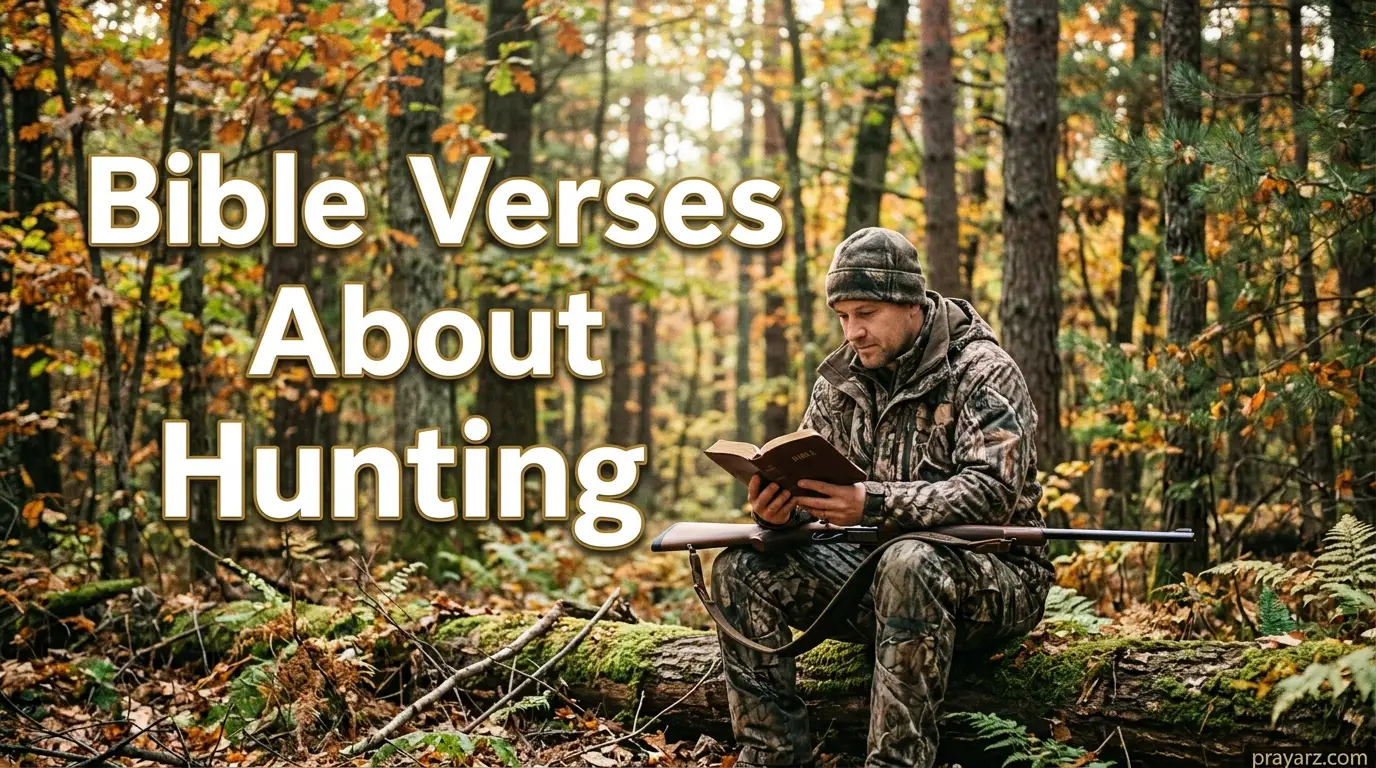
Hunting is one of the oldest human activities known to mankind. Long before cities, technology, or modern agriculture, people depended on the land, forests, and animals for survival. The Bible reflects this reality naturally. From Genesis to the prophets, we see references to hunters, shepherds, wilderness survival, and God’s provision through nature.
When we study Bible verses about hunting, we are not simply exploring an ancient lifestyle. We are entering into a deeper understanding of God’s relationship with creation, human responsibility, and divine provision. Hunting in Scripture is never glorified for sport or violence. Instead, it is presented within a framework of survival, stewardship, discipline, and dependence on God.
The Bible consistently reminds us that the earth belongs to the Lord:
“The earth is the Lord’s, and everything in it.” — Psalm 24:1
This truth shapes how we understand hunting. Humans may use creation, but they do not own it. Every animal, forest, and wilderness belongs first to God.
In this expanded study, we will explore Scripture in depth, including Old and New Testament perspectives, historical background, moral teachings, and spiritual symbolism connected to hunting. We will also reflect on how these truths apply to modern Christian life, ethics, and environmental responsibility.
Hunting in the World of the Bible (Ancient Context)
To understand biblical references to hunting, we must first understand the world in which the Bible was written. In ancient times, hunting was not a recreational hobby. It was a survival necessity.
People hunted to:
- Provide food for their families
- Obtain clothing from animal skins
- Trade goods in local markets
- Protect livestock from predators
In the rugged landscapes of the ancient Near East, survival often depended on skill in the wilderness. Forests, deserts, and mountains were full of wild animals such as deer, wild goats, lions, bears, and birds.
Hunting required:
- Patience and silence
- Knowledge of animal behavior
- Tracking skills
- Physical endurance
- Awareness of danger
This is why Scripture often connects wilderness life with strength and resilience.
Key Biblical Hunters and Wilderness Figures
Esau: The Skilled Hunter of the Field
He remains the most famous hunter in the Bible.
“Esau was a skillful hunter, a man of the field.” — Genesis 25:27
His identity was deeply tied to the outdoors. He lived a rugged, active life and provided food through hunting. His father Isaac enjoyed the meat Esau brought back, which created emotional favoritism in the family.
However, Esau’s story is not just about hunting skills. It reveals a spiritual lesson: physical ability is not equal to spiritual wisdom.
Esau later traded his birthright for food, showing how immediate physical desire can overpower long-term spiritual blessing.
This teaches believers that even valuable skills like hunting must never replace spiritual priorities.
Ishmael: The Wilderness Archer
Ishmael also represents survival in the wild:
“He lived in the wilderness and became an archer.” — Genesis 21:20
His life was shaped by desert survival. Archery, hunting, and wilderness skills were essential for his existence.
Yet, even in isolation, Scripture says:
“God was with the boy.”
This powerful statement reminds us that God’s presence is not limited by location, comfort, or civilization.
David: Protector of Sheep Against Wild Beasts
David was not a hunter in the traditional sense, but he fought wild animals:
“Your servant has killed both lion and bear.” — 1 Samuel 17:36
David’s experience shows that wilderness life often involved defending livestock from predators. His courage in the wild prepared him for spiritual leadership.
God often uses wilderness experiences to shape future leaders.
God’s Covenant With Creation After the Flood
After the flood, God made a covenant that included all living creatures:
“I establish my covenant with you and with every living creature.” — Genesis 9:9–10
This is one of the most important passages for understanding hunting and animal life in Scripture.
God gave permission for humans to eat meat:
“Every moving thing that lives shall be food for you.” — Genesis 9:3
But this permission came with boundaries:
- Life is sacred
- Blood represents life
- Creation must not be abused
This covenant shows balance: provision without exploitation.
Hunting, therefore, is not freedom without responsibility. It exists within God’s covenantal order.
Clean and Unclean Animals: Divine Structure in Creation
Leviticus 11 outlines detailed dietary laws for Israel. These laws shaped how people interacted with animals, including hunting practices.
Clean animals included:
- Deer
- Sheep
- Goats
- Certain fish and birds
Unclean animals included:
- Pigs
- Scavengers
- Certain birds of prey
These distinctions taught Israel that:
- Not all creation is used the same way
- Holiness affects daily life
- Food choices reflect obedience to God
Hunting, in this context, was regulated and structured, not random or careless.
God’s Provision in the Wilderness
The wilderness narratives of Israel provide powerful insights into God’s provision.
In the desert, God provided:
- Manna from heaven
- Quail for meat
- Water from rocks
“He rained meat on them like dust.” — Psalm 78:27
This shows that even when humans lack food, God can provide through nature or supernatural means.
The provision of quail is especially relevant to hunting themes, as it shows God Himself supplying animal food in the wilderness.
Nature, Animals, and God’s Glory in the Psalms
The Psalms frequently celebrate creation:
“The animals of the forest are mine.” — Psalm 50:10
“How many are your works, Lord!” — Psalm 104:24
Animals are not random beings. They are part of God’s design and praise Him through their existence.
Psalm 104 describes:
- Lions seeking food from God
- Birds building nests
- Sea creatures depending on Him
This reinforces a key truth: even hunted animals belong to God first.
Beasts of the Wild in the Book of Job
The Book of Job contains some of the most detailed descriptions of wild animals in Scripture.
God speaks of:
Behemoth
A powerful creature symbolizing strength and creation’s complexity.
Leviathan
A sea creature representing uncontrollable natural forces.
“Can you pull in Leviathan with a fishhook?” — Job 41:1
These passages show:
- God controls all wild creatures
- Humans are limited in power
- Creation is vast and mysterious
This humbles humanity and places hunting within divine boundaries.
Hunting Wisdom in Proverbs
Proverbs often uses nature-based imagery:
“The righteous care for the needs of their animals.” — Proverbs 12:10
This verse is central to Christian ethics regarding animals. It shows compassion as a mark of righteousness.
Other wisdom principles include:
- Avoiding unnecessary harm
- Acting with restraint
- Living responsibly within creation
Even though hunting is not directly commanded, the wisdom literature guides how it should be approached.
“Thou Shalt Not Kill”: Understanding the Command
One common question is whether hunting violates the commandment:
“You shall not kill.” — Exodus 20:13
In Hebrew, this refers specifically to unlawful murder of humans, not animals used for food.
The Bible clearly distinguishes between:
- Murder (forbidden)
- Animal killing for food (permitted under regulation)
This distinction is important for understanding biblical ethics.
New Testament Perspective on Hunting and Food
The New Testament shifts the focus from ceremonial food laws to spiritual freedom in Christ.
“Nothing that enters a man from outside can defile him.” — Mark 7:15
Peter’s vision in Acts 10 further emphasizes this:
“Do not call anything impure that God has made clean.”
This does not promote harm to creation but shows that food laws are no longer barriers to righteousness.
Fishers of Men: Hunting Imagery in the New Testament
Jesus called His disciples:
“Follow Me, and I will make you fishers of men.” — Matthew 4:19
This is a powerful spiritual transformation of hunting imagery:
- Hunting becomes evangelism
- Catching animals becomes saving souls
- Wilderness skill becomes spiritual mission
John the Baptist and Wilderness Living
John the Baptist lived in the wilderness and ate:
- Locusts
- Wild honey
This reflects dependence on nature and simplicity of life. It also shows that wilderness living is part of biblical spiritual formation.
Christian Ethics of Hunting Today
Modern believers must apply biblical principles wisely.
Key ethical guidelines include:
- Avoid cruelty to animals
- Do not hunt for unnecessary harm
- Respect breeding cycles and ecosystems
- Avoid wastefulness
- Recognize God’s ownership of creation
“The earth is full of His riches.” — Psalm 104:24
Many Christians also support conservation and responsible wildlife management as part of stewardship.
Hunting and Environmental Stewardship
The Bible supports care for creation:
- Humans are caretakers, not destroyers
- Nature reflects God’s glory
- Abuse of creation dishonors God
Responsible hunting today often includes:
- Wildlife population balance
- Environmental protection
- Ethical harvesting
- Respect for ecosystems
Stewardship is a biblical duty, not an option.
Spiritual Symbolism of Hunting
Hunting in Scripture also carries symbolic meaning:
- Seeking God requires focus like tracking
- Faith requires patience like waiting for prey
- Spiritual warfare requires awareness like wilderness survival
- Dependence on God mirrors reliance on nature
These metaphors help believers understand spiritual discipline.
Prayer Points
- Pray for wisdom in using God’s creation responsibly
- Pray for compassion toward animals and nature
- Pray for discipline and self-control in lifestyle choices
- Pray for gratitude for God’s daily provision
- Pray for spiritual awareness and vigilance
Personal Prayer
Lord God Almighty, You are the Creator of heaven and earth and everything that lives within it. Thank You for the beauty of Your creation and the wisdom found in Your Word. Teach us to respect all living things and to use Your gifts with humility and responsibility.
Help us to walk in wisdom, avoiding waste and cruelty. Give us hearts that honor You in every action and decision. May we always remember that the earth belongs to You and we are only caretakers.
Guide us to live in gratitude, discipline, and reverence. Let our lives reflect Your glory in all we do. In Jesus’ name, Amen.
FAQ: Bible Verses About Hunting
1. Does the Bible approve of hunting?
Yes, the Bible shows hunting as a survival activity and does not forbid it when done responsibly.
2. Who was the first hunter in the Bible?
Esau is the first well-known hunter described in Scripture.
3. What does God say about animals?
God values animals as part of His creation and calls humans to care for them.
4. Is killing animals a sin in the Bible?
No, killing animals for food is permitted, but cruelty and waste are discouraged.
5. What is the spiritual meaning of hunting in the Bible?
It symbolizes patience, focus, discipline, and dependence on God.
6. What did Jesus say about hunting?
Jesus did not address hunting directly but used fishing imagery to teach spiritual truths.
7. Are Christians allowed to eat meat?
Yes, the New Testament allows meat consumption with gratitude and wisdom.
8. What is the main biblical principle about creation?
God owns all creation, and humans are stewards.
9. Does God care about animals?
Yes, Scripture shows God provides for and cares about all creatures.
10. How should Christians treat wildlife today?
With respect, responsibility, and awareness of ecological balance.
Conclusion
The Bible’s teaching on hunting is deeply connected to God’s creation, human responsibility, and spiritual wisdom. From Genesis to the teachings of Jesus, we see a consistent message: God is the owner of all life, and humans are stewards entrusted with His creation.
Hunting in Scripture is never about violence or dominance. It is about survival, provision, discipline, and respect. It reminds us that every creature belongs to God and every resource must be used with gratitude.
As believers today, we are called to live with wisdom in how we interact with nature. Whether we are outdoors or in daily life, our actions should reflect stewardship, compassion, and reverence for the Creator.
May this truth lead us closer to God, helping us see His hand in every part of creation and guiding us to live faithfully in His world.
